
What Another Season of Skipping This Actually Costs
Put off garage door storm prep one more season and the bill doesn't show up as a line item — it shows up as a blown-in door, a soaked garage full of ruined storage, and sometimes structural damage to the house itself once wind gets inside. A failed garage door during a storm isn't a cosmetic problem. It's the difference between a house that holds together under pressure and one where the roof starts to lift because wind has nowhere else to go but up and out. Replacing a door after storm damage costs far more than reinforcing or maintaining the one you already have, and insurance doesn't always make that gap disappear.
Why the Garage Door Is Your Home's Weakest Wall
Every other wall in a typical house is a solid, continuous structure. The garage door is the opposite: a large panel of thin material, hinged in sections, held in place by springs, tracks, rollers, and a handful of mounting brackets. It's also usually the biggest single opening in the home's exterior. When straight-line winds or a tropical system pushes against that surface, the door absorbs more force per square foot than almost anything else on the house.
If that door fails — buckles inward, pops off its tracks, or get torn from its hinges — wind rushes into the garage and pressurizes the whole structure from the inside. That's when roofs peel back and walls separate from their foundations. Engineers call this a wind-load failure, and it's exactly why building codes in wind-prone regions require garage doors rated to withstand specific pressure levels. A door that isn't rated for it, or one that's rated correctly but poorly maintained, can fail well below its designed threshold.
Signs Your Door Won't Hold Up When It Matters
Track and Panel Problems
Humidity swings and salt-laden air common to this part of Florida cause metal tracks to corrode and wood or composite panels to swell or warp. A door that already sticks, grinds, or needs a shove to close isn't moving smoothly in its track, which means it's not seated correctly. A door that's even slightly off track has far less resistance to lateral wind pressure.
Spring and Opener Strain
Rust is the quiet killer of garage door springs here, where afternoon downpours and heavy humidity keep moisture in the air even when it's not raining. A spring with visible rust or gaps between its coils is weaker than it looks, and a weakened spring won't support the door evenly during the wind pressure of a storm. It can also fail suddenly, which is its own hazard. Similarly, an aging opener that struggles to lift the door on a humid morning is a sign that the whole system is working harder than it should — added strain that shows up at the worst possible time.
Loose Hardware
Hinges, brackets, and roller housings loosen gradually from everyday use. In calm weather this just means a noisier door. In sustained wind, loose hardware is often the first point of failure, because it's the connection points — not the panel material — that typically give way first.
What to Actually Do Before the Next Storm Rolls In
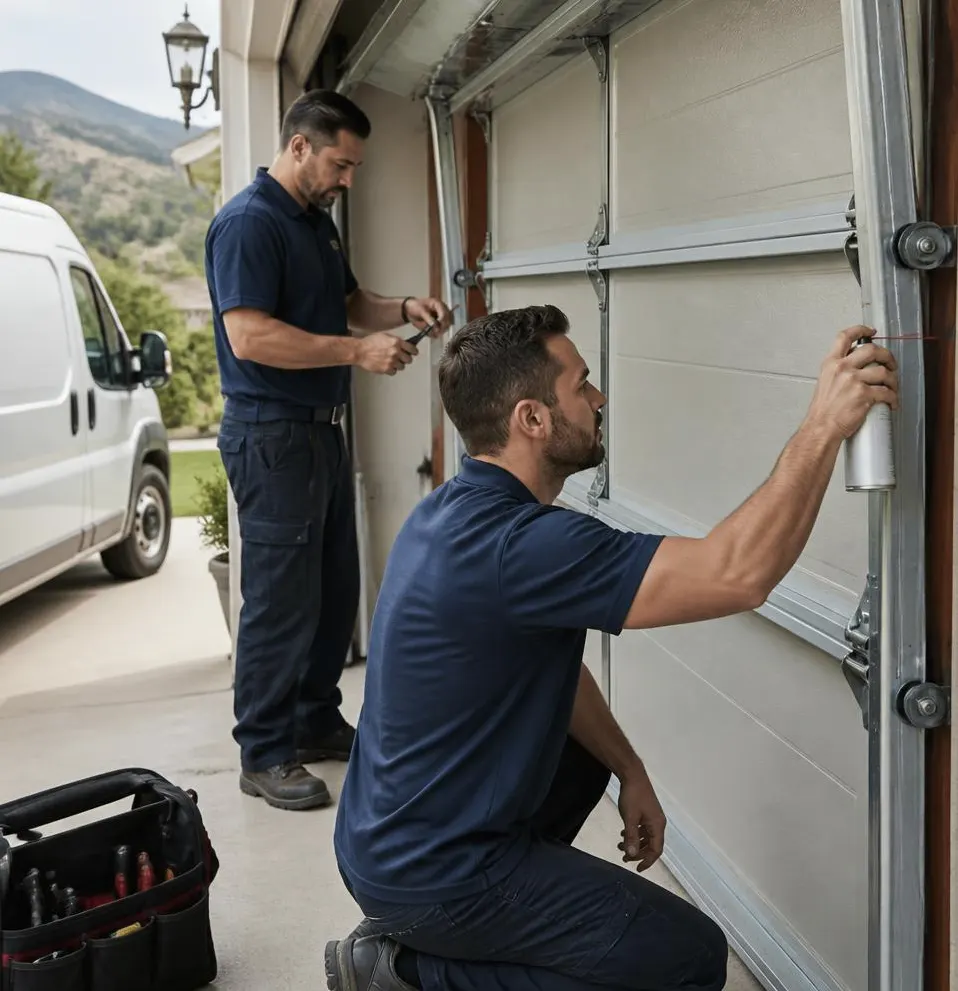
- Inspect every hinge, bracket, and roller for rust, looseness, or cracking, and tighten or replace hardware that shows wear.
- Check the tracks for dents, bends, or debris buildup that could cause the door to jump off during stress. Clean and realign as needed.
- Test the springs for visible corrosion, gaps, or sagging. Springs are under high tension and shouldn't be adjusted or replaced without the right tools — this is one of the few repairs where a DIY attempt can genuinely injure someone.
- Confirm the door's wind rating matches what your home needs. Many older doors, especially on homes built before current wind-load standards were common, were never engineered for today's expected pressures.
- Add horizontal bracing if your door doesn't already have it. Retrofit kits reinforce panels against inward bowing, and they're a fraction of the cost of a full replacement — often in the range of a couple hundred dollars for materials versus well over a thousand for a new wind-rated door, though actual costs vary by door size and material.
- Test the opener's manual release and battery backup, if it has one, so you can operate the door by hand during a power outage.
- Lubricate moving parts with a silicone-based product rather than household oil, which attracts grit and breaks down faster in heavy humidity.
When to Call Doral Door & Opener
If your inspection turns up rust on the springs, a door that's drifted off its tracks, or hardware that's loose no matter how many times you tighten it, that's the point to call in a professional rather than keep patching it yourself. We handle garage door spring repair where corrosion or wear has compromised the tension system, and off track door repair when panels have shifted out of alignment — both of which directly affect how well a door holds up under wind pressure. If your current door is older and wasn't built to modern wind-load expectations, we can also walk you through options for garage door installation and replacement with a door rated for what this region actually sees during storm season.
Don't wait for a forecast to find out your garage door isn't ready. Call Doral Door & Opener today and let us inspect, reinforce, or replace what's standing between your home and the next storm in Doral, FL.